




Class: Bivalvia. 3 specimens. 1 upper (right) valve and 2 lower (left) valves. The two smaller specimens in this box have an orange tinge to their internal surfaces.
ID: Z555.1.226

Class: Bivalvia. 2 specimens. Both have both valves still attached at the hinge. Large, tear-drop shaped and thick. A blue periostracum with the shell beneath paler blue or purplish.
ID: Z555.1.227

Class: Bivalvia. 3 specimen. All have both valves still attached at the hinge. Very large, broadly oval shaped and elongated. Off white in colour with a grey periostracum.
ID: Z555.1.228

Class: Bivalvia. 3 specimen. All have both valves still attached at the hinge. Large, rounded oblong shaped with a blunt squared posterior edge.
ID: Z555.1.229

Class: Gastropoda. 9 specimens. Off-white with tessellating patterns in a light grey. Conical with a slightly domed apex. 6-7 whorls. Found in deep waters on stony or gravelling floors.
ID: Z555.1.23
Class: Bivalvia. 5 specimen. 3 lower (right) valves and 2 upper (left) valves. The largest upper and lower valve appear to have once been connected. Can be very large, fan shaped and with equal ears.
ID: Z555.1.230
Class: Bivalvia. 2 specimen. Both have both valves still attached at the hinge. Long, thin and sub-rectangular. It is very straight sided unlikely many others in the razor clam family.
ID: Z555.1.231
Class: Bivalvia. 1 specimen. It has both valves still attached. Large, long and curved in shape. This specimens shares a box with 2 specimens of Ensis siliqua.
ID: Z555.1.232

Class: Gastropoda. 6 specimens. Grey with darker or brownish stripes. Conical with convex sides and a domed apex. Several specimens have operculum intact and preserved.
ID: Z555.1.24
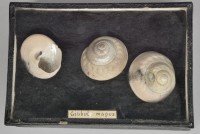
Class: Gastropoda. 3 specimens. Relatively large, off white with the iridescent surface wearing through in some places. Conical but fairly flat with up to 8 stepped whorls.
ID: Z555.1.25