




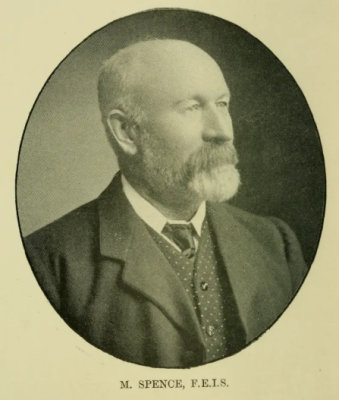
“To one whose daily work confines him inside the four walls of a room, or amid the noise and bustle of a town, the privilege of spending a few hours every week with Nature is one of the most exhilarating out-door pleasures one can enjoy.”
Magnus Spence
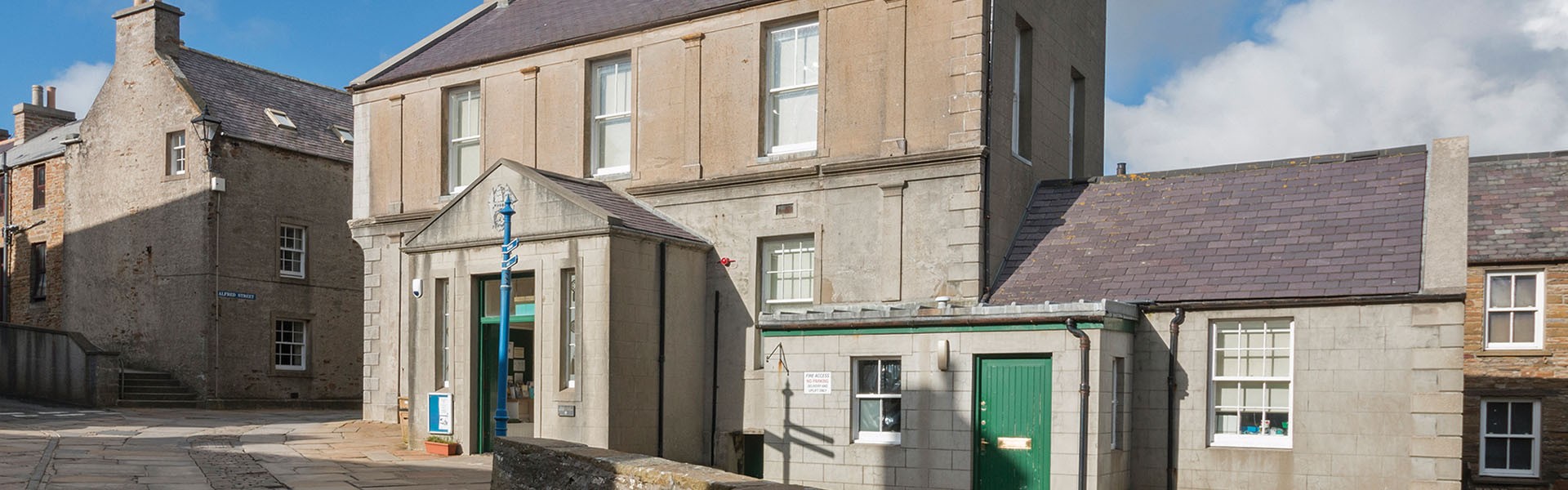
A Museum Without Walls - Wildflower Planting Project
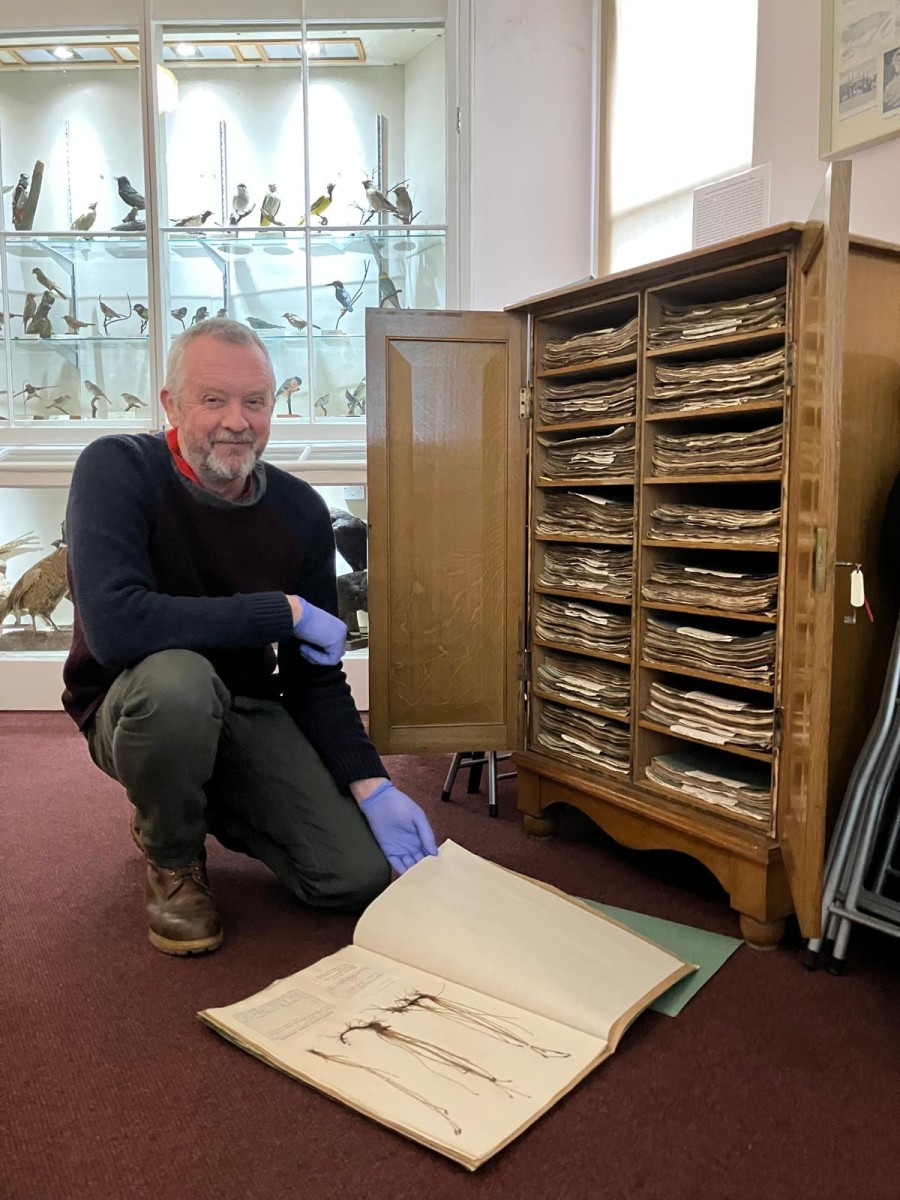
2026 marks a century since Stromness Museum was gifted the Magnus Spence herbarium. Magnus Spence F.E.I.S. (1853-1919) assembled his herbarium in the late nineteenth and very early twentieth centuries. It is a pressed and mounted collection of 918 plants organised by family and species, almost all collected in Orkney. Colonel Henry Halcro Johnston (1856-1939), another eminent Orkney botanist, reorganised the collection before it was donated to the Museum. Magnus Spence was a schoolteacher in Deerness and botany was his dear hobby. His book Flora Orcadensis was published in 1914 and is the first complete account of Orkney’s flora. To mark the centenary of the gift we have planted some native Orkney wildflowers from locally-grown seed for our visitors and pollinators to enjoy.

Here are some of the species which have been planted on the Museum pier or in planters in 2026:
Sea Mayweed Tripleurospermum maritimum
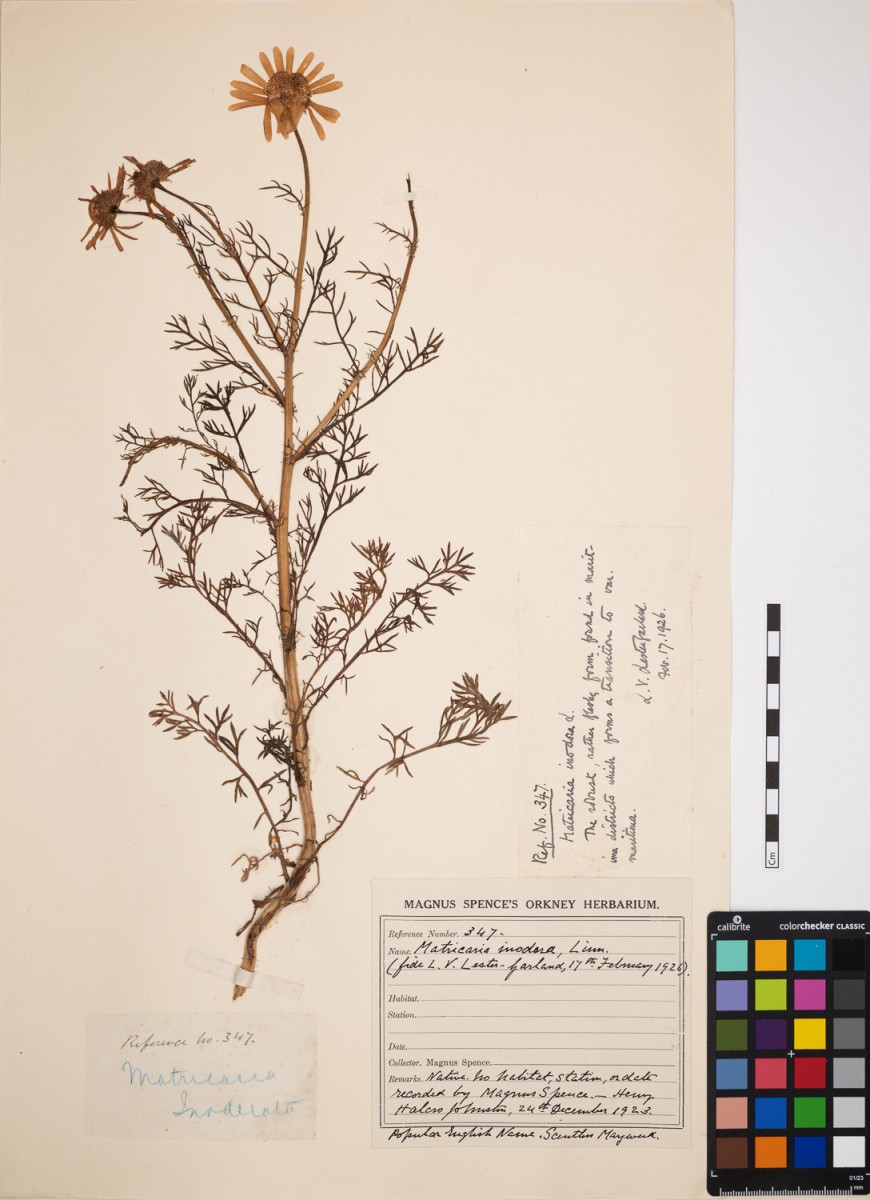
Sea Mayweed is very similar to its relative the Scentless Mayweed and in coastal areas like Orkney they freely hybridise – that is the two species can fertilise each other and the hybrids are also fertile. The specimens in Magnus Spence’s herbarium are a range of types between the two.
Sea Mayweed belongs to the Daisy family and is a composite, which means the ‘flower’ head that you see is made up of many different tiny flowers. Just like the Daisy, these consist of white ray florets and then yellow disc florets in the centre. It is a Halophyte, able to tolerate salt, as it must, living near the drift-line.
Sea Campion Silene uniflora
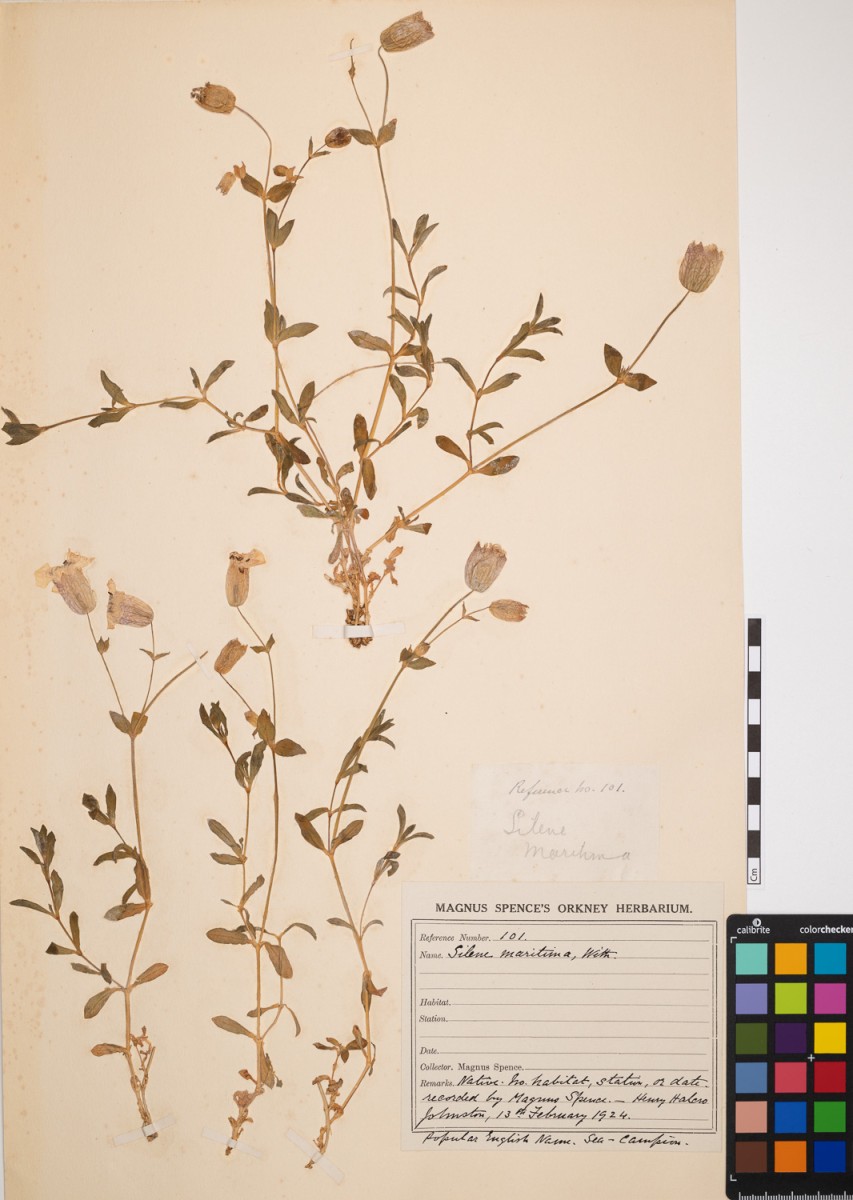
Sea Campion lives on coastal cliff tops and shingle, its white flowers are held above a papery, inflated cup-like structure called a calyx. It's a close cousin of Red and White Campion and belongs to the Pink family. It is sometimes known as 'dead man's bells' and 'witches' thimbles', after a belief that picking it near a cliff edge invited death.
Birdsfoot Trefoil Lotus corniculatus
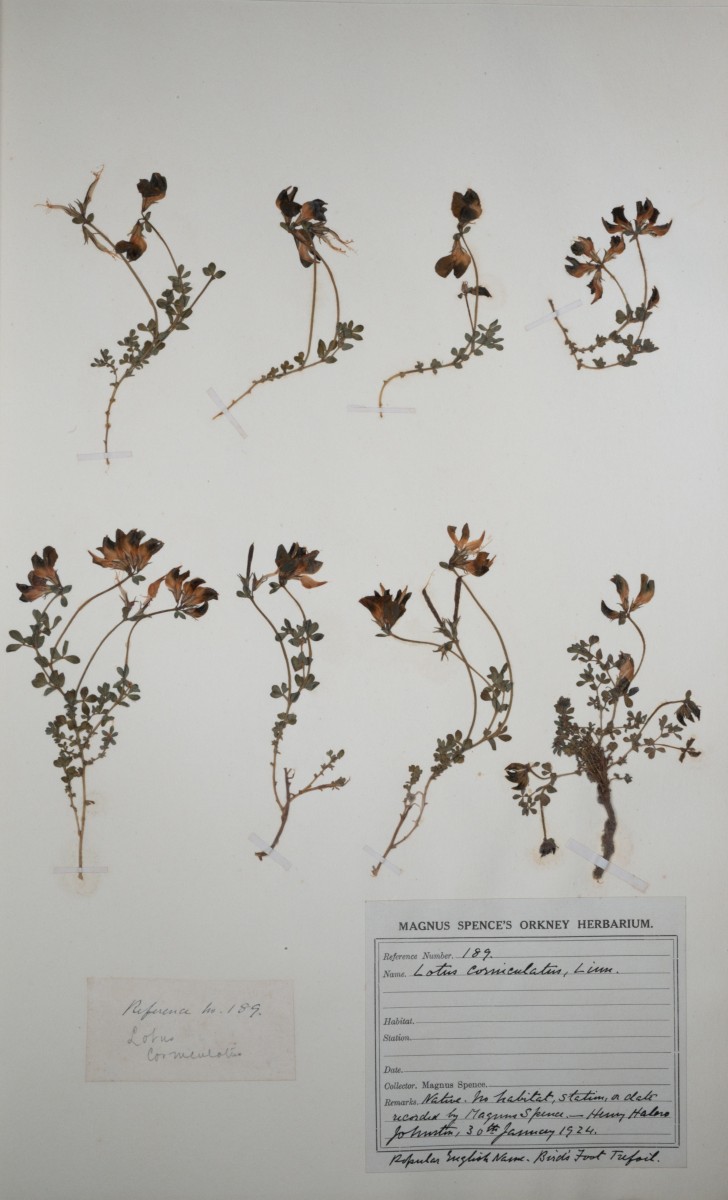
A low, scrambling member of the pea family, its yellow flowers are often streaked with orange-red, and when ripe, its black, claw-shaped seed pods radiate out like a bird's foot, giving the plant its name. Few wildflowers have collected as many nicknames, over 70 in Britain alone, including "bacon and eggs," "granny's toenails" and "hen and chickens."
Kidney Vetch Anthyllis vulneraria
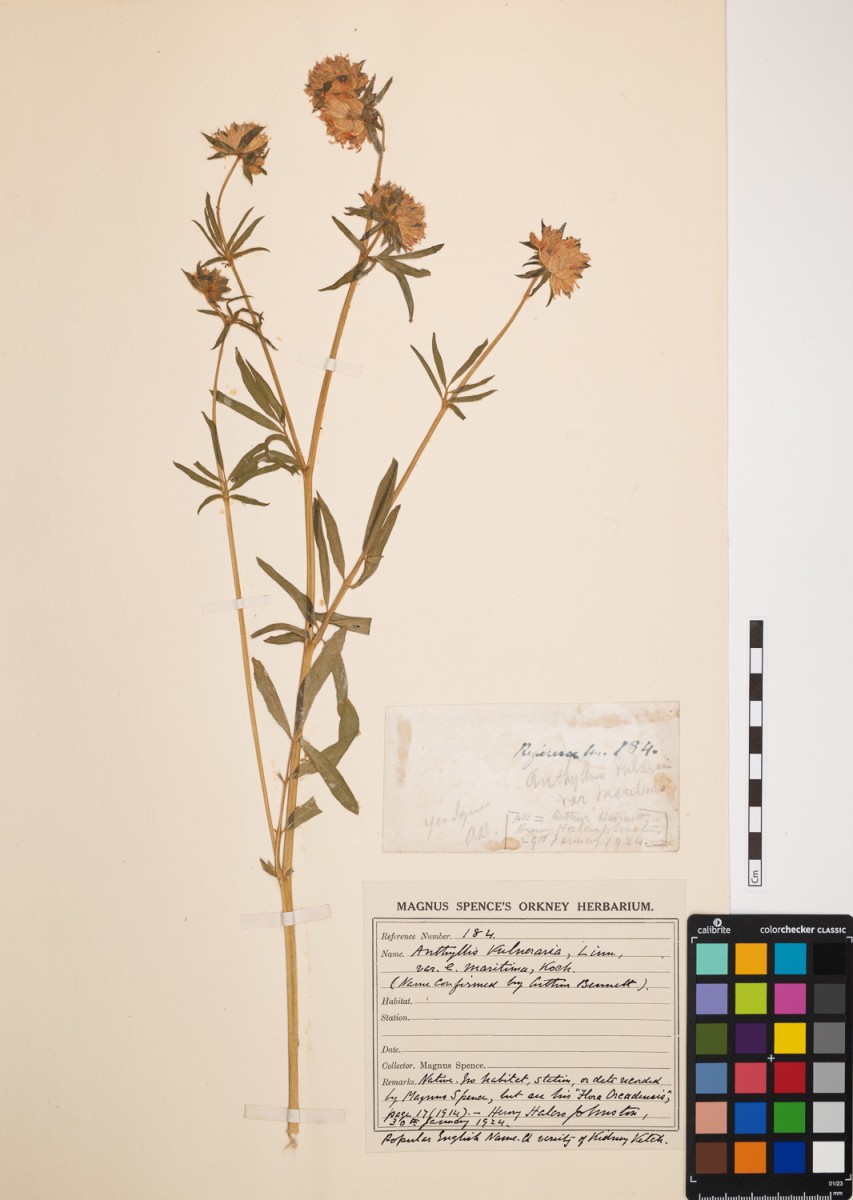
A pioneer plant of bare, disturbed ground, Kidney Vetch has soft, silvery, woolly flowerheads in yellow and sometimes orange or red. Its Latin name vulneraria means "of wounds" and for centuries herbalists used it to treat cuts and sores, earning it the folk name "Woundwort."
Thrift Armeria maritima
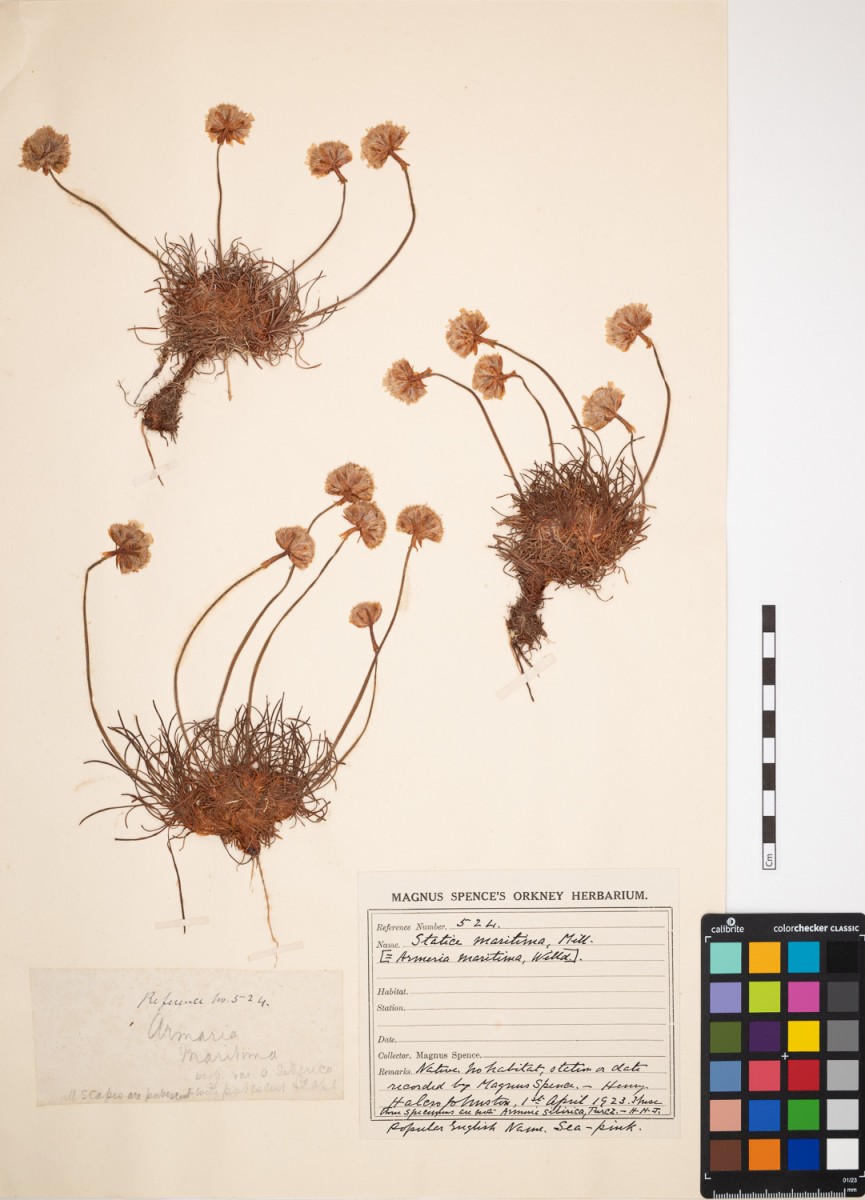
Also called Sea Pink, Thrift forms grassy tussocks topped with pink pom-pom flowerheads, anchoring itself into cliff crevices and coastal fringes with a deep, tenacious root system. In Flora Orcadensis Spence writes: “Its thick, tuberous roots, sliced and boiled with milk, were highly prized in Orkney as a remedy in pulmonary consumption.”
Sea Plantain Plantago maritima
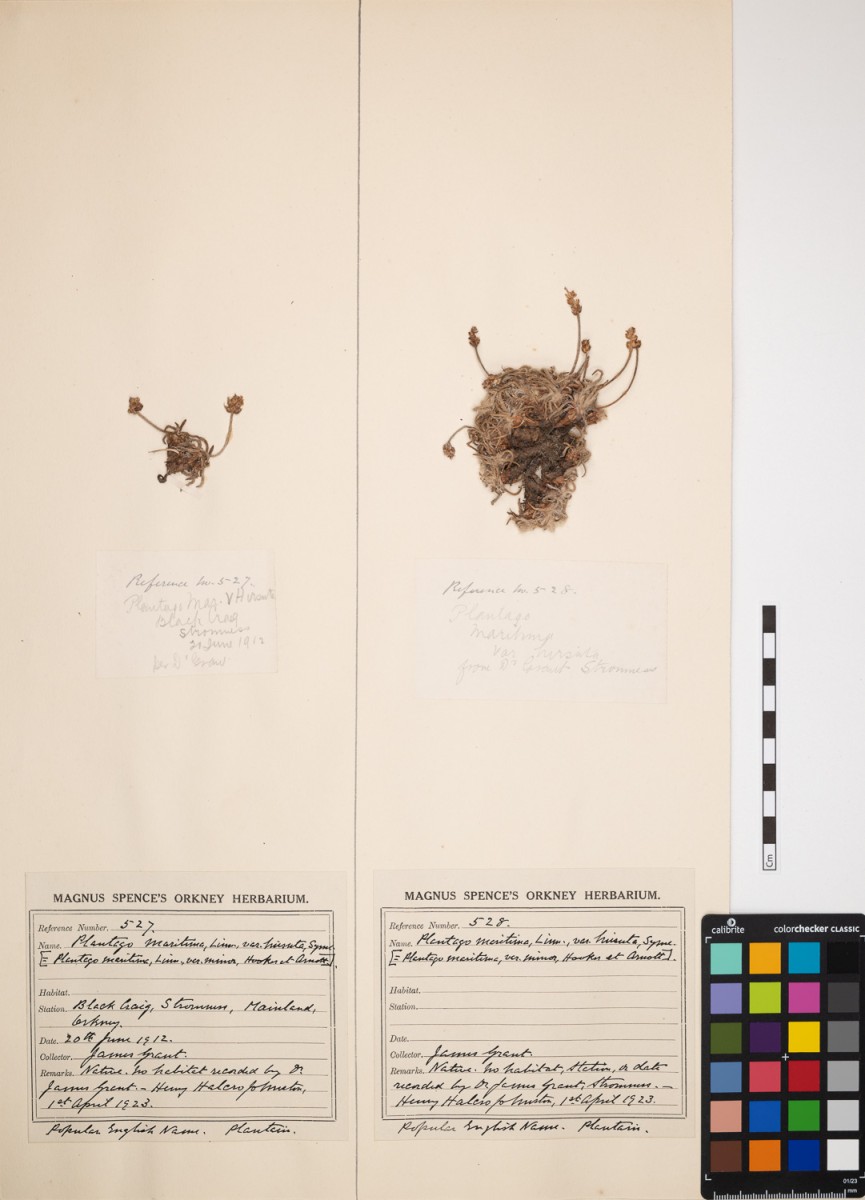
With narrow, fleshy, strap-like leaves and slim brown flower spikes, Sea Plantain is built to survive salt spray and regular tidal soaking and is a common sight along the upper shore. Magnus Spence comments that its leathery leaves are not palatable to animals, which has ensured its survival.
Red Campion Silene dioica
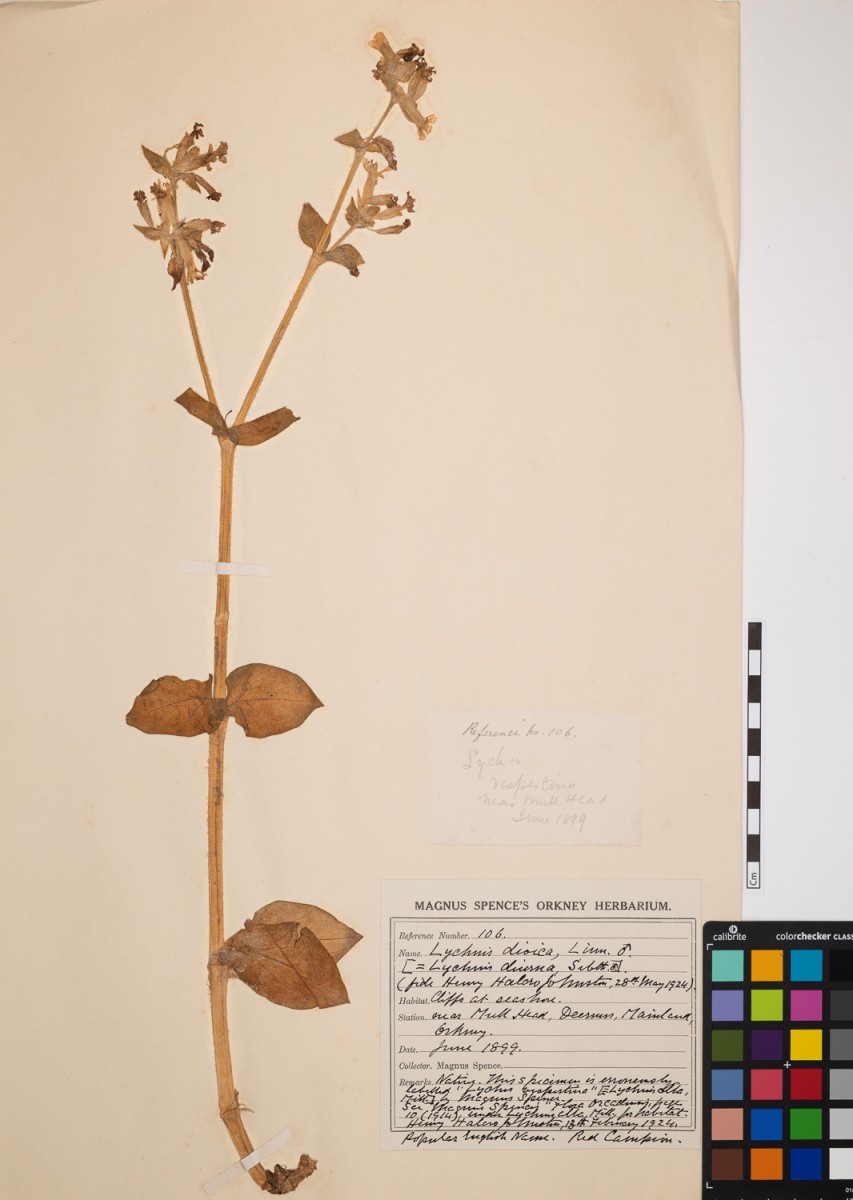
A tall, hairy flower with vivid pink, notch-petalled blooms, Red Campion is dioecious, which means male and female flowers grow on separate plants. Magnus Spence writes that it favours sandy links and sandstone cliffs.
White Campion Silene latifolia
White Campion's pale, notched flowers stay closed by day and open at dusk, releasing a sweet scent to draw in night-flying moths, a strategy that couldn't be more different from its Red Campion cousin, though the two readily hybridise.
Magnus Spence writes: “in 1899 I found it on the cliffs near Mull Head, and the year previous on the cliffs below Cutpool, Deerness, where I had some difficulty in securing it. It is native in both places. It is also growing in a ditch below U.F. Manse, Evie, where it is probably an escapee. I found it on Stove, Sanday, Sept. 1909; and on Bu, Burray, Aug. 1911.”
Knapweed Centaurea nigra
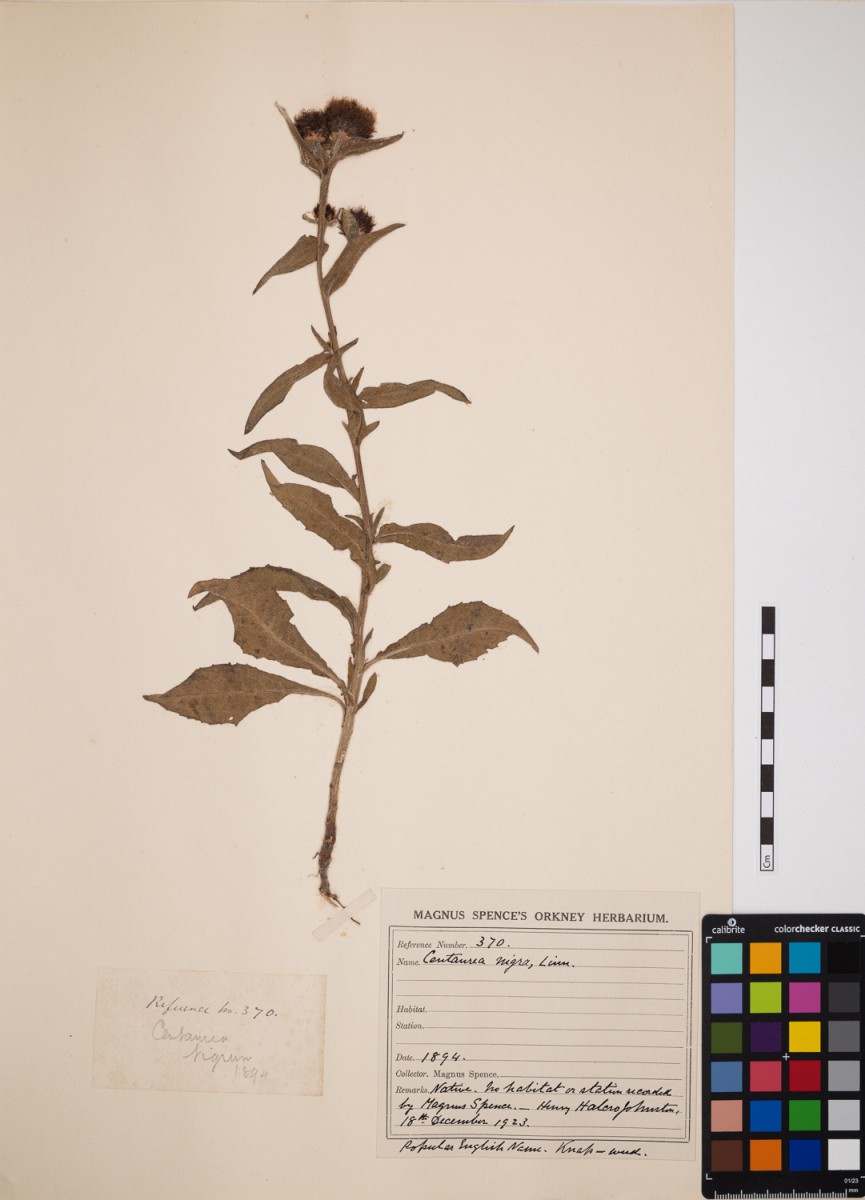
Knapweed is a thistle-relative beloved by bees and butterflies, its purple-pink flowers a familiar sight in meadows and on road verges. Spence wrote: “This plant is met with occasionally—Wideford brae, Dingeshowe, Westray, &c.; fairly common in Sanday and Burray.” Nowadays it is common, perhaps having spread from wildflower seed mixes.
Self Heal Prunella vulgaris
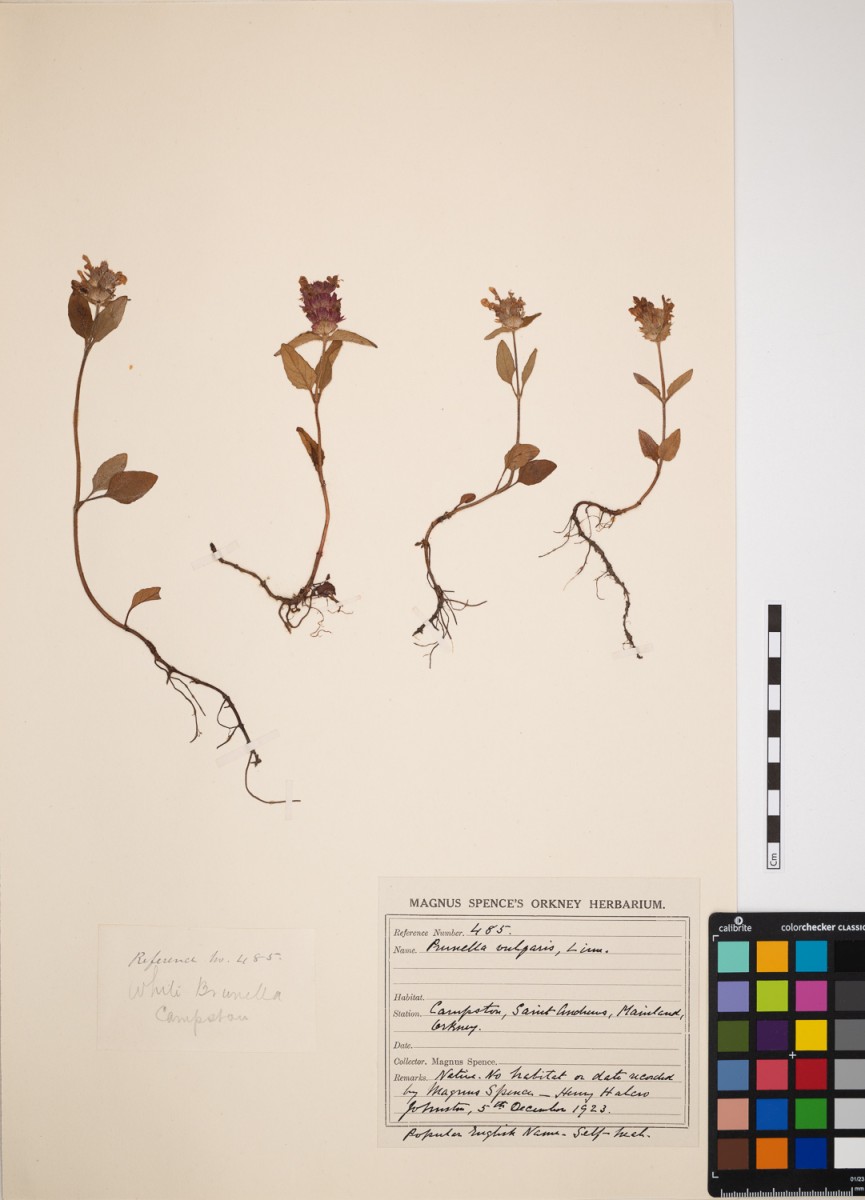
A low, creeping member of the mint family, Self Heal produces short spikes of hooded purple flowers and spreads readily wherever its stems touch soil. True to its name, it was one of the most trusted wound herbs in the medieval apothecary's kit, used by soldiers and labourers alike to treat cuts from blades and tools. Spence writes “I have sometimes met with a white variety, with pale green leaves. Its appearance is different, but in detail there is little difference.”
Ladies Bedstraw Galium verum
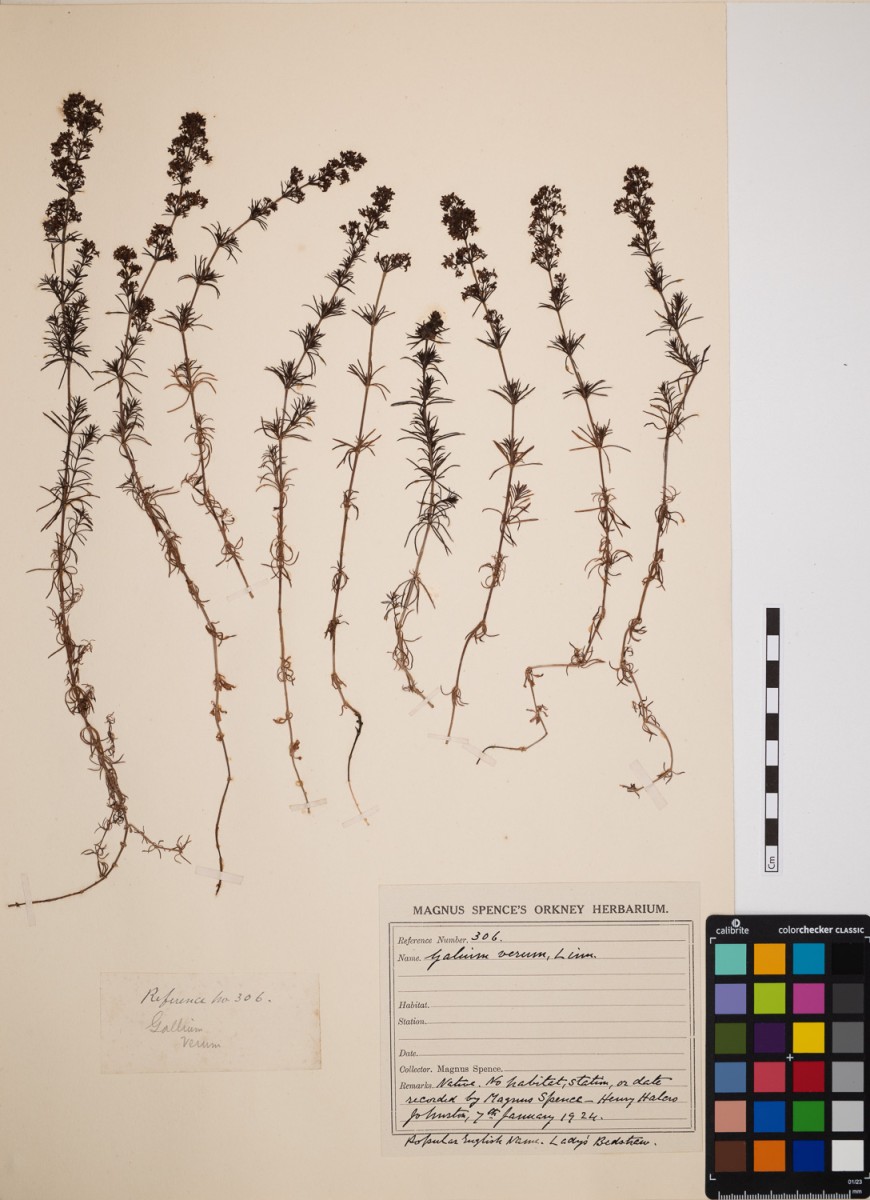
A wiry, scrambling plant with tiny, honey-scented golden flowers and whorls of needle-like leaves, Ladies Bedstraw was once one of the most useful herbs of the meadow. Its dried, flea-repelling stems were stuffed into mattresses, hence its name.
Red Clover Trifolium pratense
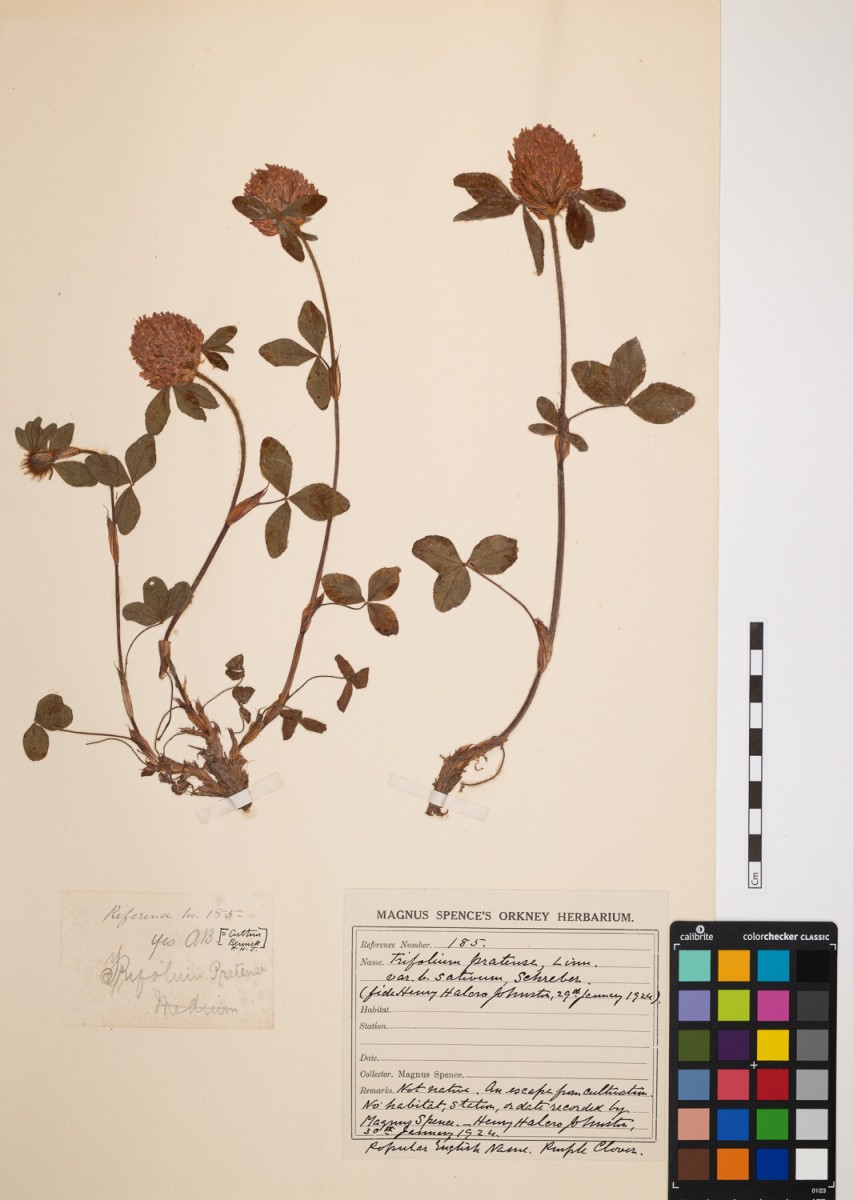
A member of the pea family, this colourful plant has a long flowering season and is great for attracting bees. It is commonly used as a fodder crop on farms and for enriching the soil.
In Flora Orcadensis Spence writes about white clover, which he calls “Smerows”
To find a four-partite clover-leaf was considered a good omen. It was used as one of the most common of Orcadian charms. It brought luck on all occasions and in all circumstances. Mr Delday, poet, Deerness, pointed out one of the most efficacious of its charms when he said that his mother bade him, on the occasion of the Lammas Market, Kirkwall, look for a smerow and put it in his boot till the market was over, for then the “cheap Johns” would not be able to cheat him, whilst he at the same time would be enabled to see through all their sleights of art; and, in addition, no wily spinster would be able to captivate him.”