


Lighthouse lens, catadioptric
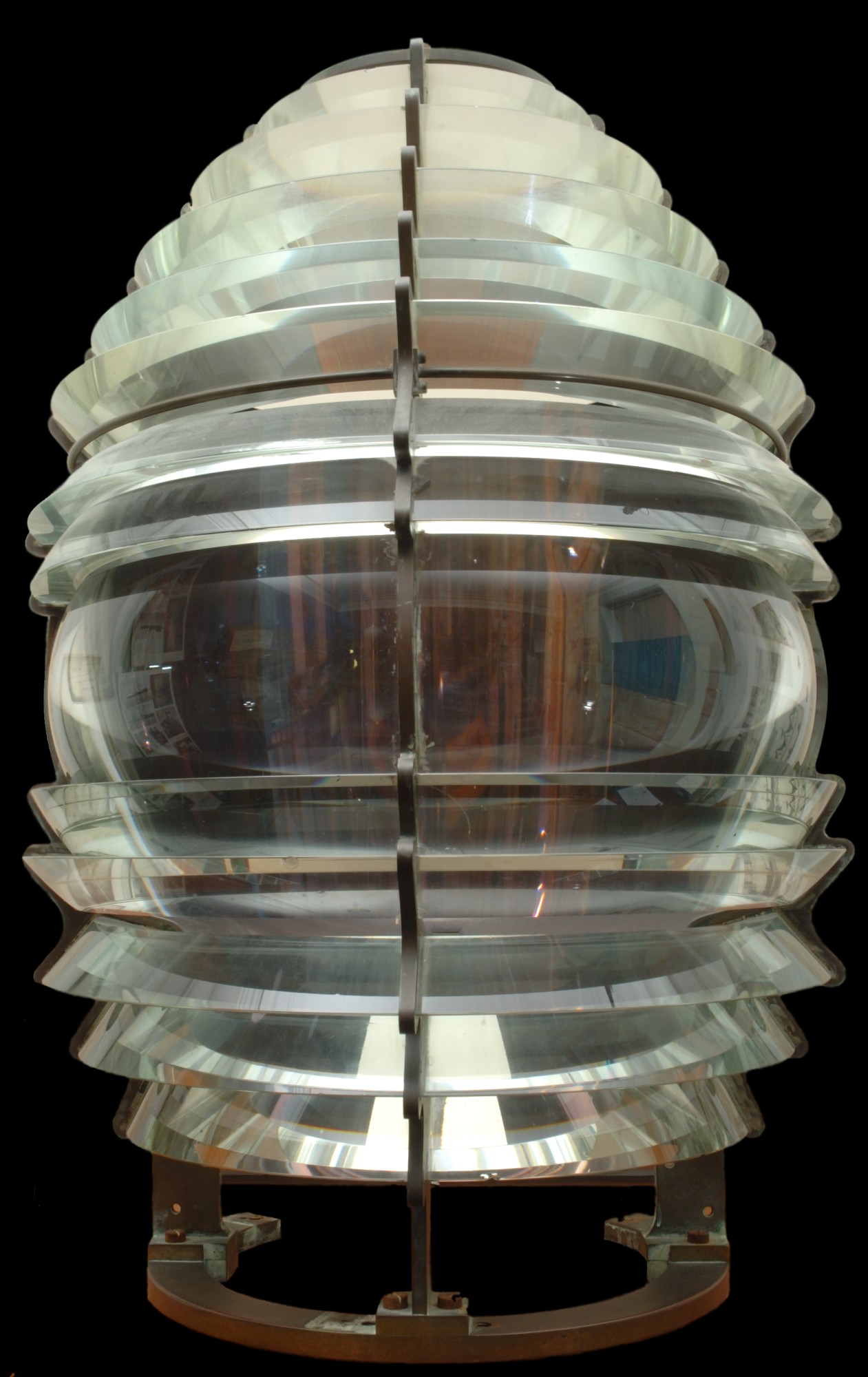
Catadioptric lighthouse lense from Hoy Low lighthouse in Graemsay. 1851. The original catadioptric lighthouse lens from Hoy Low lighthouse in Graemsay. 1851.
On loan from the Museum of Scottish Lighthouses.
The low-lying islands of Orkney proved fatal to shipping, with many vessels and lives lost. By the late 18th century lighthouses started to be built in Scotland, among the first four built was one on North Ronaldsay in 1789. In the 19th century many more lighthouses were built to warn ships of danger. In 1851 two new lighthouses were established on the island of Graemsay, one tall and one short. The reason for this was that they were leading lights, meaning you had to line up the one light above the other to ensure a safe passage through Hoy Sound. Their names reflect this, Hoy Sound High and Hoy Sound Low.
The two lighthouses were designed by Alan Stevenson, one of the pioneering family of lighthouse engineers. The lighthouse keepers’ accommodation is styled in the fashion of an Egyptian temple, which was fashionable at the time. Alan’s brother, Thomas (also a lighthouse engineer), paid a visit to Hoy Sound Low lighthouse with his teenage son, Robert Louis Stevenson, where they signed the visitors book on 18th June 1868.
While these two lighthouses were there to guide ships through the Hoy Sound and to avoid skerries on either side of it, there were some shipwrecks that couldn’t be avoided just by a warning light. On New Year’s Day 1866 the Albion was wrecked on the Point of Oxan, right below the Hoy Low lighthouse. The island men had been playing a game of mass football near the lighthouse, a tradition now only retained in Kirkwall. The ship’s sails were torn, and it was in a bad state, after being battered by storms on a voyage from Liverpool to New York with a general cargo and 43 emigrants. Most of them were saved, but ten people lost their lives, including local man, Joseph Mowat, when his boat capsized while attempting to rescue the others. It was this wreck that established Orkney’s first lifeboat station at Stromness the following year.
Hoy Sound Low was automated in 1966 and the catadioptric lens was removed. It is now on display in Stromness Museum, along with the visitors’ book containing the Stevenson signatures.
Production
| Date (general) | 1851 |